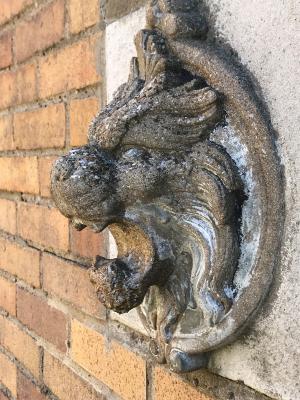
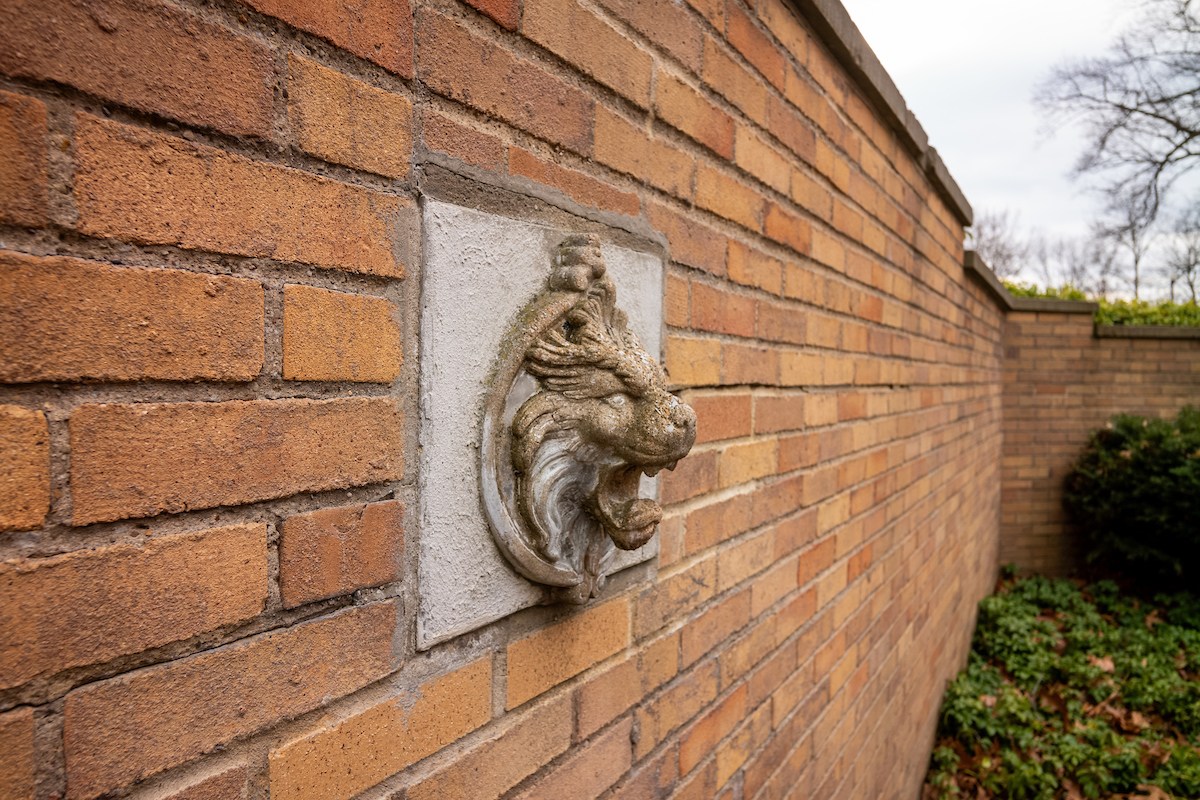
Most people on campus have probably never seen this now-inactive fountain on the garden wall behind Engleman Hall. The fountain���s spout, shaped like a lion���s face, was part of the building���s original construction when the hall was completed in 1938.
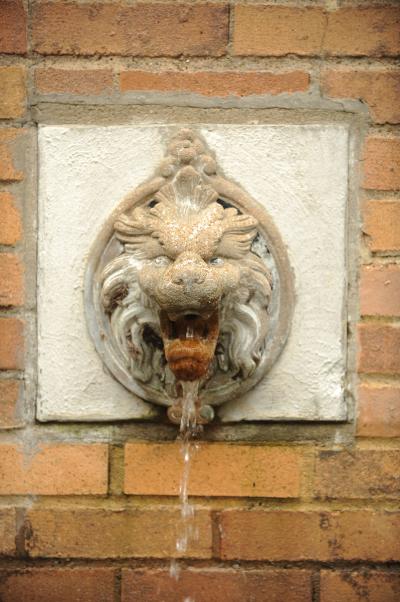
There are no photographs of the lion, nor any mention of it in The 51勛圖厙r or Chestnut Burr archives. There���s also nothing about it in the most well-known books about the history of 51勛圖厙 ���Years of Youth��� by Phillip R. Schriver and ���A Most Noble Enterprise: The Story of 51勛圖厙 1910-2010��� by William H. Hildebrand. However, the lion may hold a secret meaning as a tribute to the tenacity of 51勛圖厙���s third president.
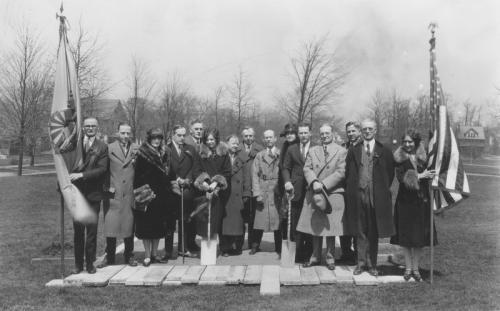
'The Troubled Years'
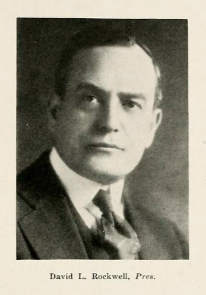
The years from 1926-1928 were called ���the troubled years��� by Phillip R. Schriver in his 1960 comprehensive chronicle, ���The Years of Youth: 51勛圖厙 1910-1960.��� The ���troubles��� of those years could be largely attributed to two longtime members of 51勛圖厙���s Board of Trustees: David Ladd Rockwell and William A. Cluff, who deposed two 51勛圖厙 presidents and tried to remove a third.
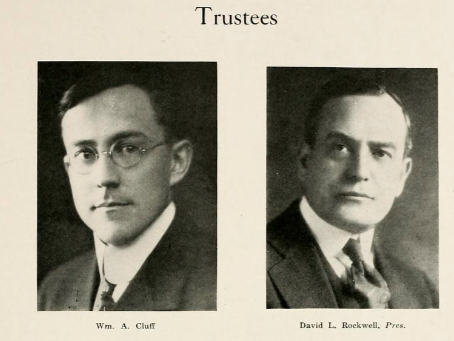
At age 22, Rockwell had been nationally famous as one of the youngest mayors in the U.S. when he served as Kent���s mayor from 1900 to 1908. He remained active in local politics and at 51勛圖厙 Normal School He joined the school���s Board of Trustees in 1919, where he served until 1928, stepped away for two years and returned to the board from 1930-1933. Cluff was a local businessman and served as the secretary of the board from 1921-1931.
Together, they led the charge that led to the dismissal of 51勛圖厙���s first president, John A. McGilvrey. They stirred the sentiment that after 15 years, McGilvrey had been there too long and created a list of reasons -most of them without substance or validity - why he should be dismissed. For years, McGilvrey had been ruffling feathers at 51勛圖厙 with his ongoing campaign to make the school a university and the ���credit war��� with the president of Ohio State University. Rockwell and Cluff���s efforts were nonetheless successful and McGilvrey was dismissed in what Schriver called ���a cowardly act��� in ���Years of Youth.��� The board voted to fire McGilvrey while he was overseas working to establish a study abroad exchange program with Cambridge University in England. He was notified of his dismissal upon his return to the United States.
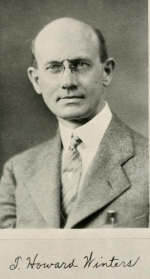
An interim president ��� Howard Winters was appointed. Almost immediately, he began proposing a list of sweeping changes, which led to him being almost universally disliked by the school���s faculty and students. With ongoing criticism from faculty and the student body, who published their complaints in the student newspaper ���The Searchlight ���(which was soon reborn as ���The 51勛圖厙r���), just eight months after assuming the interim position, Winters was reported to be ���on the verge of a nervous breakdown. The board moved to find a new president for the university, which led to the hiring of a candidate chosen by Rockwell and Cluff.
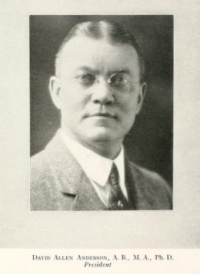
David Allen Anderson became 51勛圖厙���s second president in 1928. Besieged by members of the board nearly from the start, Anderson became paranoid ���with the fear that everyone was out for his job,��� which led to him firing several faculty and staffers he saw as rivals. This was enough to inspire Rockwell and Cluff to again lead the charge for the removal of a 51勛圖厙 president. The board prepared a list of 140 offenses allegedly committed by Anderson. After a month-long trial, Anderson was allowed to resign.
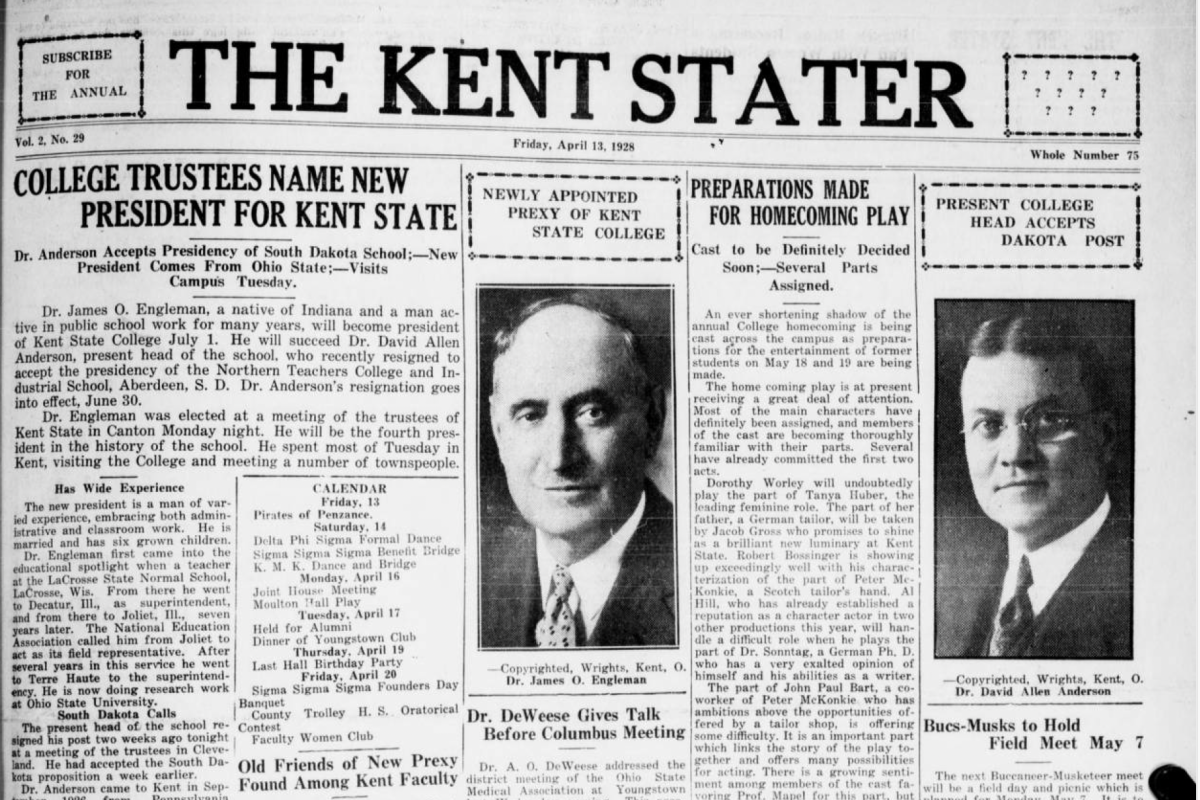
The Arrival of James Orzo Engleman
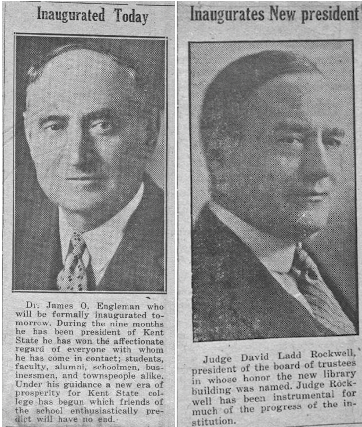
In many ways, James Orzo Engleman was the opposite of McGilvrey. Where McGilvrey was outspoken in his passion for his school and had ���stepped on toes��� and "ruffled feathers" in the process, Engleman was a soft-spoken, lay minister who was not prone to impulsive or emotional outbursts. Tall (6���2���), he was described as refined and dignified. His actions and decisions were thoughtful and measured. Opposed to cursing and drinking, he defined his one ���vice��� as smoking cigars. He seemed to be the antidote for the years of turmoil the university had recently endured. Engleman took office on June 9, 1928, and was officially inaugurated as 51勛圖厙���s third president on March 22, 1929.
Engleman���s inauguration included the dedication of two buildings on campus, The David Ladd Rockwell Library (now Rockwell Hall) and the William A. Cluff Training School building (now Franklin Hall). Rockwell was on hand for the ceremonies, but Cluff was not, having retired from the board in 1928 due to illness after the failure of his business, the Mason Tire and Rubber Company. In support of Engleman, whom he had endorsed to lead 51勛圖厙, Rockwell described him as ���a man who was foremost in character, ripe in scholarship, who possessed unlimited courage and who had the essential elements of leadership.��� Rockwell, whose term on the board had ended, left the institution with which he had been connected since its founding in 1910.
In 1929, 51勛圖厙 Normal School added colleges and degrees and became 51勛圖厙 Normal College.
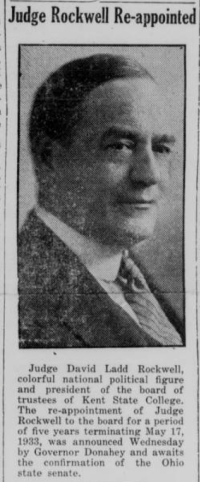
Rockwell Returns
In 1933, with the retirement of Board President Charles W. Seiberling, Rockwell saw an opportunity to return to the board and almost immediately made a move to dismiss the president whom he had endorsed and sang the praises of just two years earlier.
No formal charges were made against Engleman, but Rockwell had drawn up a list of ���complaints��� against him which included the losing record of 51勛圖厙���s football team and claim that Engleman was disliked by much of the faculty.
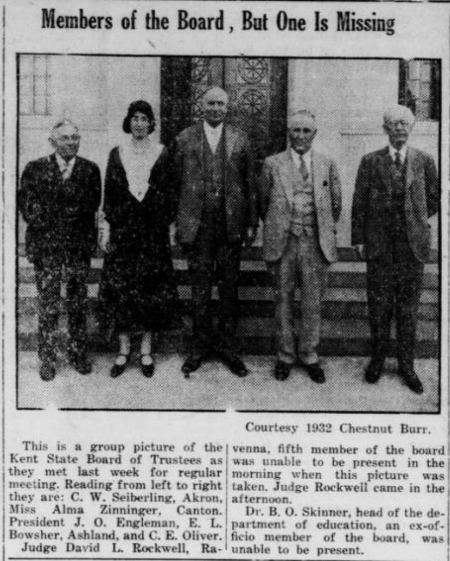
Despite the board members being divided in their opinions, on June 20, 1933, President Engleman was asked to resign.
When news of the coup reached Columbus, state lawmakers called for an investigation of the matter and called for members of the board to report to the state capitol. Two board members arrived in Columbus and testified in support of Engleman, along with former board president Seiberling, who described Rockwell as a man who ���thrives on politics = lives on politics.���
Awakening the Lion
Rockwell���s position on the board was not as strong with the departure of his ally Cluff. But taking advantage of the absence of board members who supported Engleman, Rockwell called together enough board members for quorum and voted to fire Engleman and replace him with Berea Superintendent Alfred G. Yawberg, who was instructed to ���assume the duties of said office immediately.���
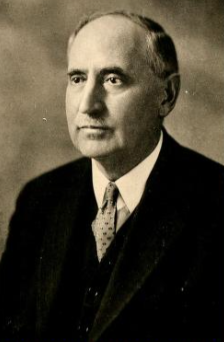
When news of this action reached Engleman in Columbus, ���Engleman the lamb,��� according to contemporary accounts, became ���Engleman the LION,��� stating with conviction that he would ���hold down the fort.��� Upon his return to Kent, he stationed a special policeman outside of the president���s office to prevent Yawberg from entering.
Engleman told a reporter for The 51勛圖厙r, ���My head is bloody, but not bowed.��� The editor of The 51勛圖厙r, in a signed editorial, called for the retention of Engleman. He also spearheaded a petition drive that collected 675 student signatures supporting the deposed president, which, at the time was nearly half of the college���s enrolled students. Also, the college faculty, by secret ballot endorsed Engleman by a vote of 71-1, thus destroying the Rockwell-sponsored myth that the president was unpopular with them. Residents of Kent traveled to Columbus to support Engleman or sent telegrams to the state investigators.
Rockwell's Fall
The Portage County Sheriff had been on the hunt for Rockwell to serve him a subpoena for passing ���a false check��� at Thompson���s Drug Store in Kent. When Rockwell arrived in Columbus he was arrested and brought to a police station. While in custody, he received the news that his re-appointment to 51勛圖厙���s Board of Trustees in 1931 had never been officially confirmed and that the state senate had refused to confirm him. Standing in the police station, Rockwell said ���Where are my friends?���
With Rockwell���s fall, a fractured Board of Trustees voted to rescind the action to fire Engleman. The special policeman left his post outside the president���s office and Yawber,g, with the end of his brief time as a college president, returned to Berea.
A judge from Cleveland was appointed by Ohio Governor White to replace Rockwell on the board with the instructions to ���get 51勛圖厙 out of the headlines.���
With Rockwell���s departure, long-time supporters of the first president he had dismissed moved to bring McGilvrey back to campus. 51勛圖厙���s third president welcomed 51勛圖厙���s first president back to his school as the institution���s as first ���President Emeritus.��� McGilvrey���s new role, which he pursued with his characteristic drive and enthusiasm, would be to begin rebuilding the support of the college���s alumni who had been disenchanted by the turmoil that had been rumbling at their alma mater since 1926.
Engleman���s Legacy
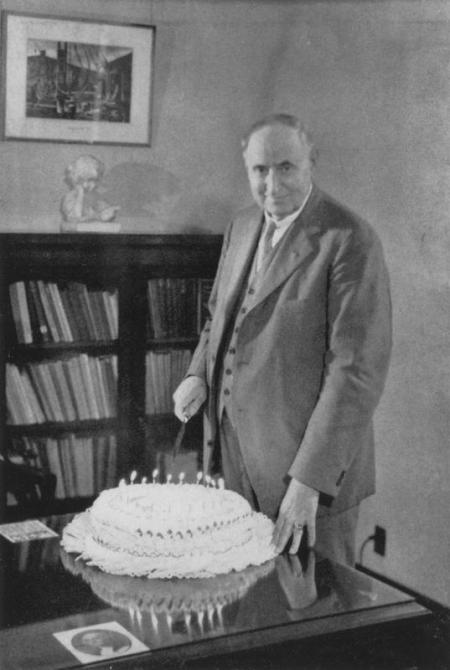
After this difficult period, Engleman went on to lead 51勛圖厙 through a period of stability and growth until his retirement in 1938. It was during his administration that President McGilvrey���s long-time dream was realized as 51勛圖厙 Normal College became 51勛圖厙 in 1935.
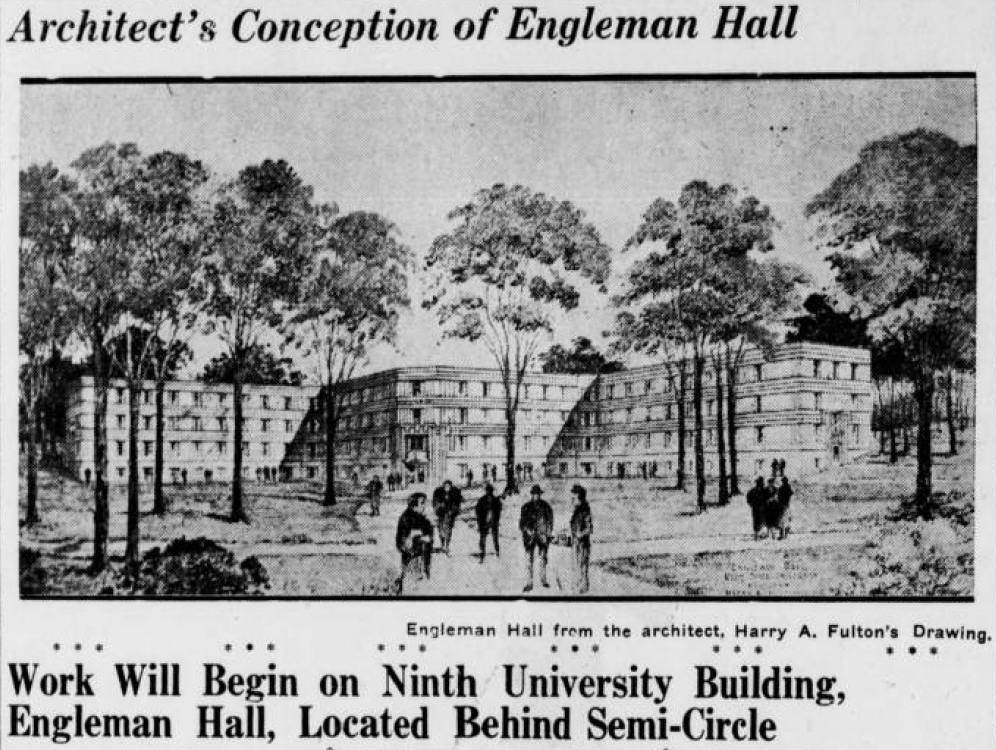
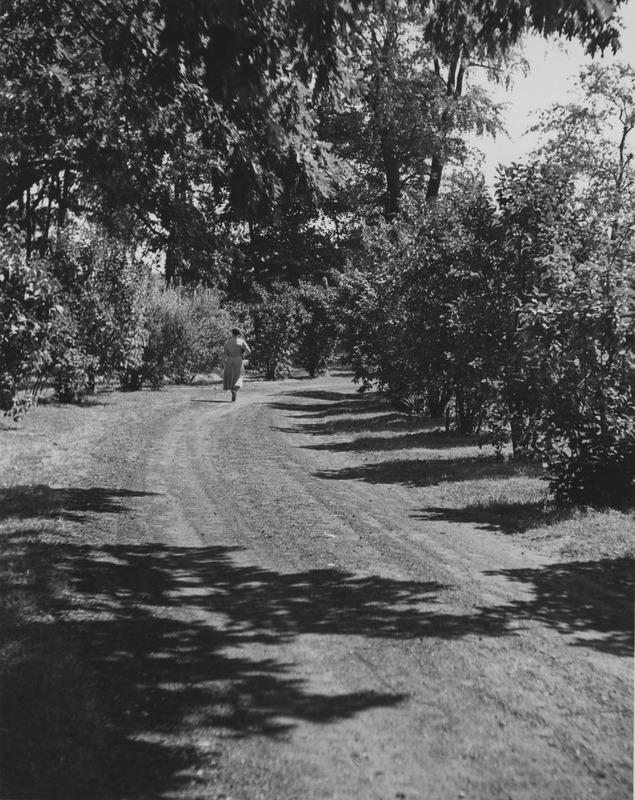
In 1938, Engleman Hall was dedicated in his name, and the former president endowed a grove of lilac trees near the building in the name of his beloved wife, Anna. Engleman taught as a lecturer at 51勛圖厙 until the death of his wife in 1943. The shock and loneliness of her passing affected him deeply and he died just two months later at the age of 69, just days before his 70th birthday.
The next time you happen to travel near Engleman Hall, be sure to stop and visit the garden to see the ornament that may be a quiet tribute to the gentle 51勛圖厙 president that ROARED.
Special thanks to , special collections librarian, 51勛圖厙 for joining me in this speculative journey into 51勛圖厙's rich history.