
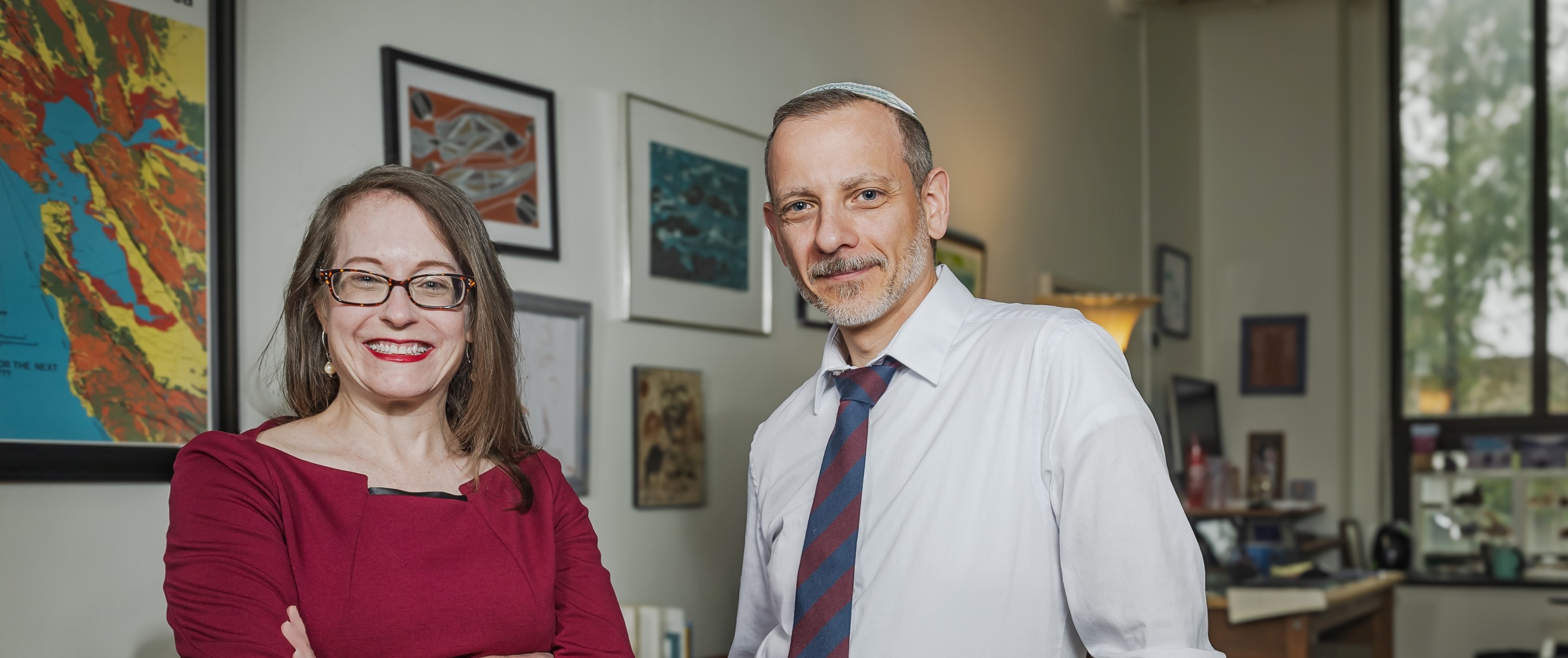
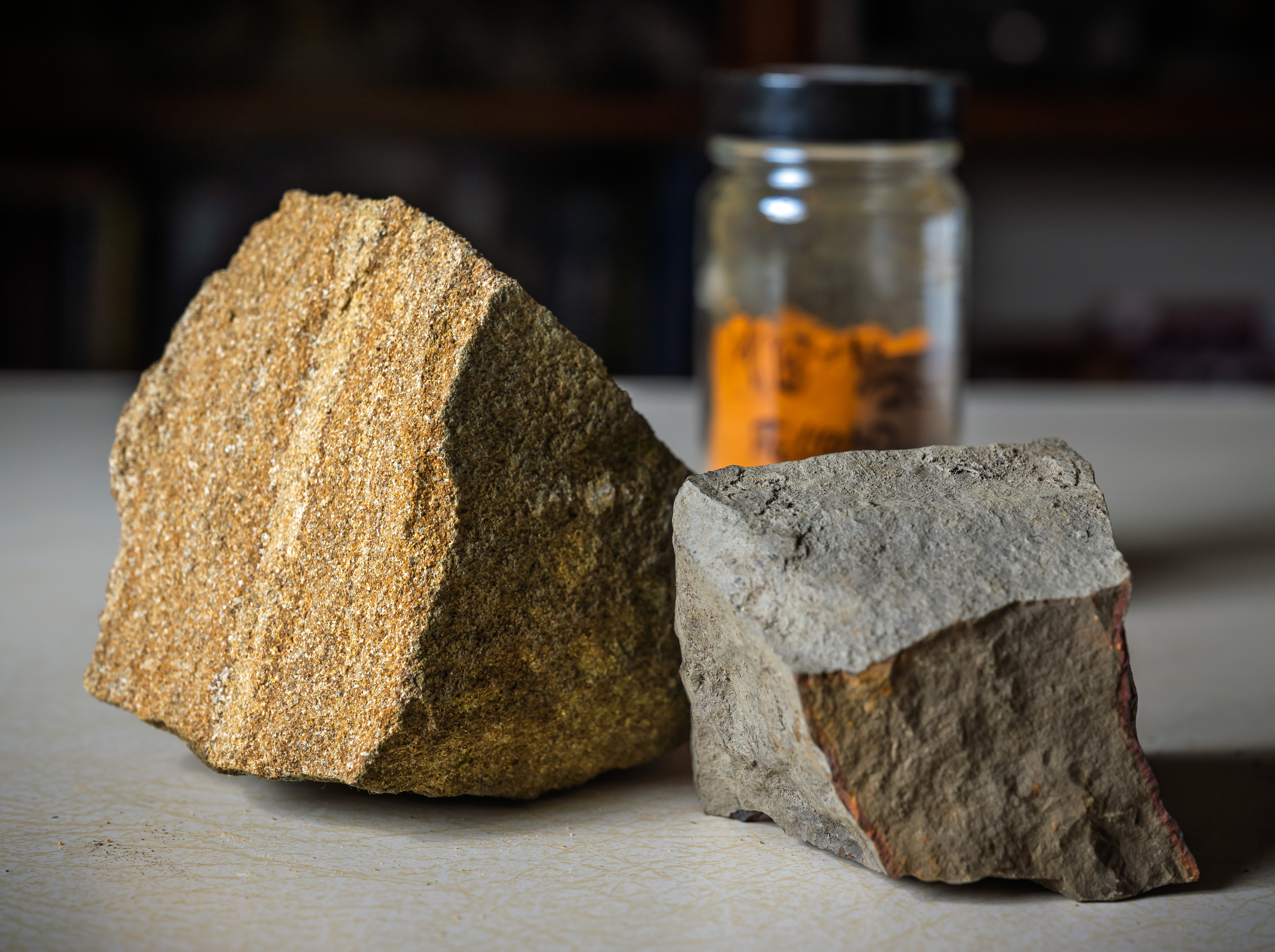
A new three-year, $833,000 (NSF) grant is fueling research at 51勛圖厙 that explores the environmental risks and resource potential of acid mine drainage (AMD) in Appalachian Ohio. The project involves science education initiatives, engaging 51勛圖厙 students with high school educators and students in firsthand research.
Environmental Legacy and Rare Earth Element Potential
David Singer, Ph.D., earth sciences professor at 51勛圖厙, has spent more than a decade investigating contaminants from abandoned coal mines. Having a background in mineralogy and geochemistry, his research focuses on how metals such as lead, arsenic and copper travel through watersheds.
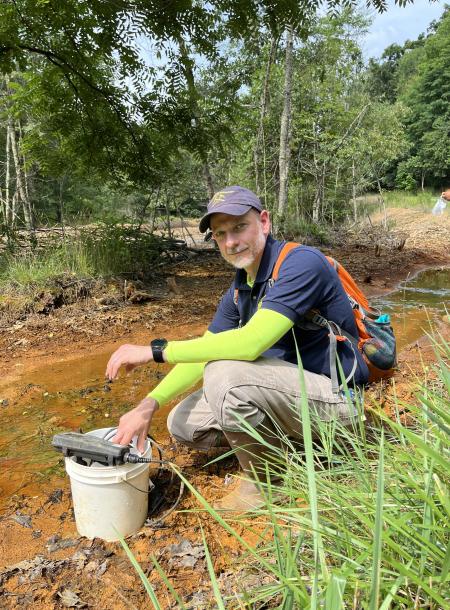
���The thing that I'm interested in and that my research group focuses on the most is contamination and questions about how humans affect the environment ��� especially metal contaminants,��� Singer said.
Singer said abandoned coal mines across Appalachia often discharge AMD���acidic, metal-rich water that can severely impair streams, rivers and ecosystems. These sites contain high concentrations of rare earth elements, metals essential for hundreds of consumer products and modern technologies, including batteries, smartphones and clean energy technology.
"Some of these mines have high concentrations of these metals and some don't," Singer said. "Part of the story of this project is trying to understand why."
From Field Sites to the Laboratory
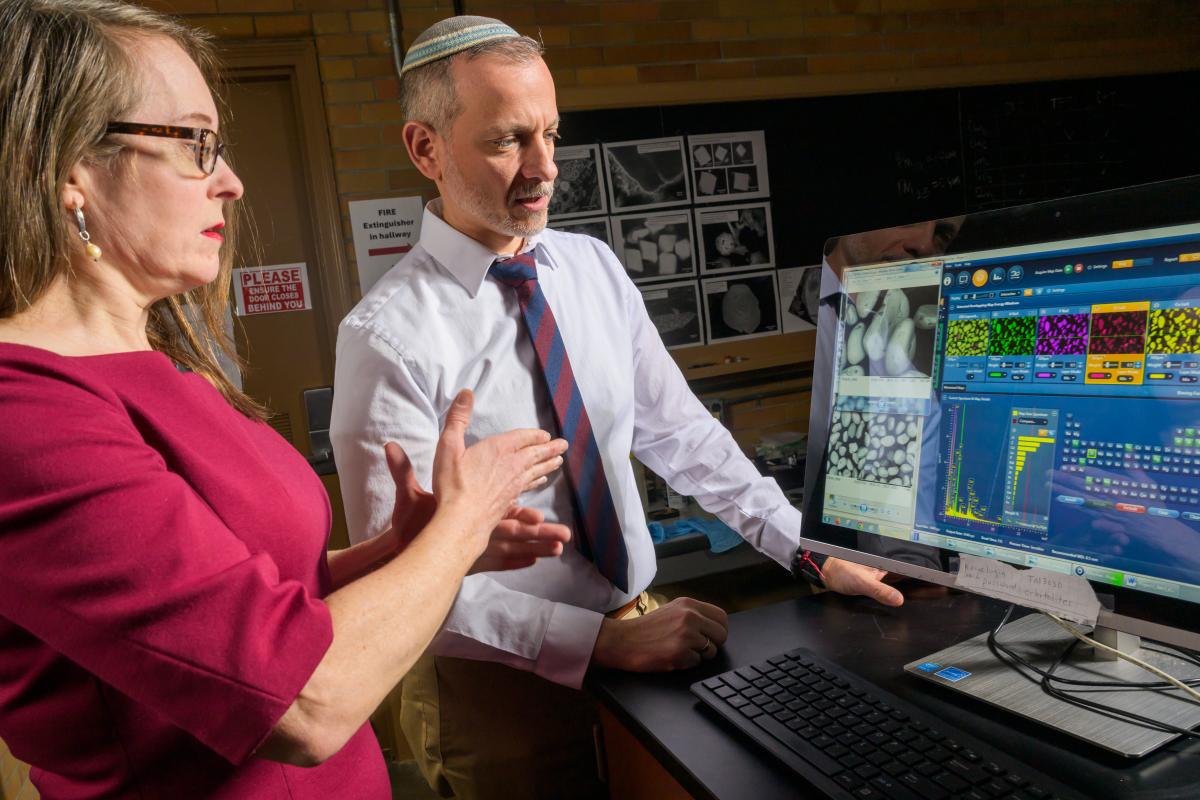
The research involves sampling rocks, water and sediments from mine sites in eastern and southeastern Ohio. Singer's team will combine field monitoring with laboratory analysis to determine why certain mines release higher concentrations of metals than others.
"We do laboratory work and we do field work," Singer said. "The second and third projects will involve more frequent sampling and more regular field work including collecting water samples, collecting sediment samples, doing measurements in the field and then bringing back both liquid and solid samples for analysis.���
Mentorship in Science Education and Workforce Development
The project is also focused on science education and workforce development. Bridget Mulvey, Ph.D., associate professor of science education, will lead initiatives designed to connect 51勛圖厙 students with high school teachers and students.
"What I love is that this project is a beautiful, meaningful integration of science and education, supporting and extending the aims of both," Mulvey said. "For me, the most important part of this project is high school teachers and students doing important real-world, community-based science with scientists."
The program will recruit three to five high school teachers for a two-week summer research experience. Those teachers will then help recruit up to 20 high school students for their own intensive research experience the following year. University students will serve as mentors in this ���cascading mentorship��� model.
"Students who teach are actually better scientists for research, so we're using teaching to promote scientists' growth as well as the growth of high school teachers and students," Mulvey said.
Kip Brady, a science teacher at New Philadelphia High School, is one of the teachers who will participate in the outreach activities.
���I am looking forward to being part of a project focused on turning lemons into lemonade," Brady said. "Mine drainage is a scourge of Appalachia, and so an opportunity to find an economic win for our communities and landscapes left impoverished by earlier waves of resource extraction is welcome.���
Local Communities and Global Relevance
Singer emphasized the importance of addressing local environmental issues while exploring larger global implications.
"There is this balance between appreciating the natural environment and reckoning with the impact that we have," Singer said. "That sort of dichotomous view of seeing both the beauty and the challenge of using natural resources for me is a through line through this project and a lot of my research and teaching."
Mulvey added that students in Appalachian Ohio could benefit from seeing relevant, local pathways into varied science and environmental careers.
"High schoolers are owed the knowledge of what is possible. Connection to scientists and to community-based science work in their own communities can expand students' ideas about science and careers," Mulvey said. "This project also involves extensive hands-on science experiences and skill development needed for some jobs."
Mulvey also noted the boost to local economies the project could have.
���We are actually fueling a local economy by having people more prepared to imagine being meaningfully involved in that economy in ways that are informed by their experience in this project.���
Next Steps
Singer said the project may eventually inform pilot extraction projects, similar to those in Pennsylvania and southern Ohio, where iron has been recovered from AMD treatment processes.
"One of the real strengths of the project is there are hundreds, if not thousands, of abandoned mine sites in Ohio,��� Singer said. ���Trying to develop a framework for knowing which ones are a priority for treatment and which ones have the potential for secondary economic benefit is an incredibly important first step.���
For 51勛圖厙, the NSF award marks both recognition of long-term research and a commitment to community-engaged science.
"Everything is intertwined: the science and the education, the science and the community, and the community and its people," Mulvey said. "Beautiful messy humans, beautiful messy science.���
###
Media Contact:
Jim Maxwell, JMAXWEL2@kent.edu, 330-672-8028